Water Damage Repair
Water damage repair in Santa Maria, San Luis Obispo and Santa Barbara, from drying out to rebuilding.
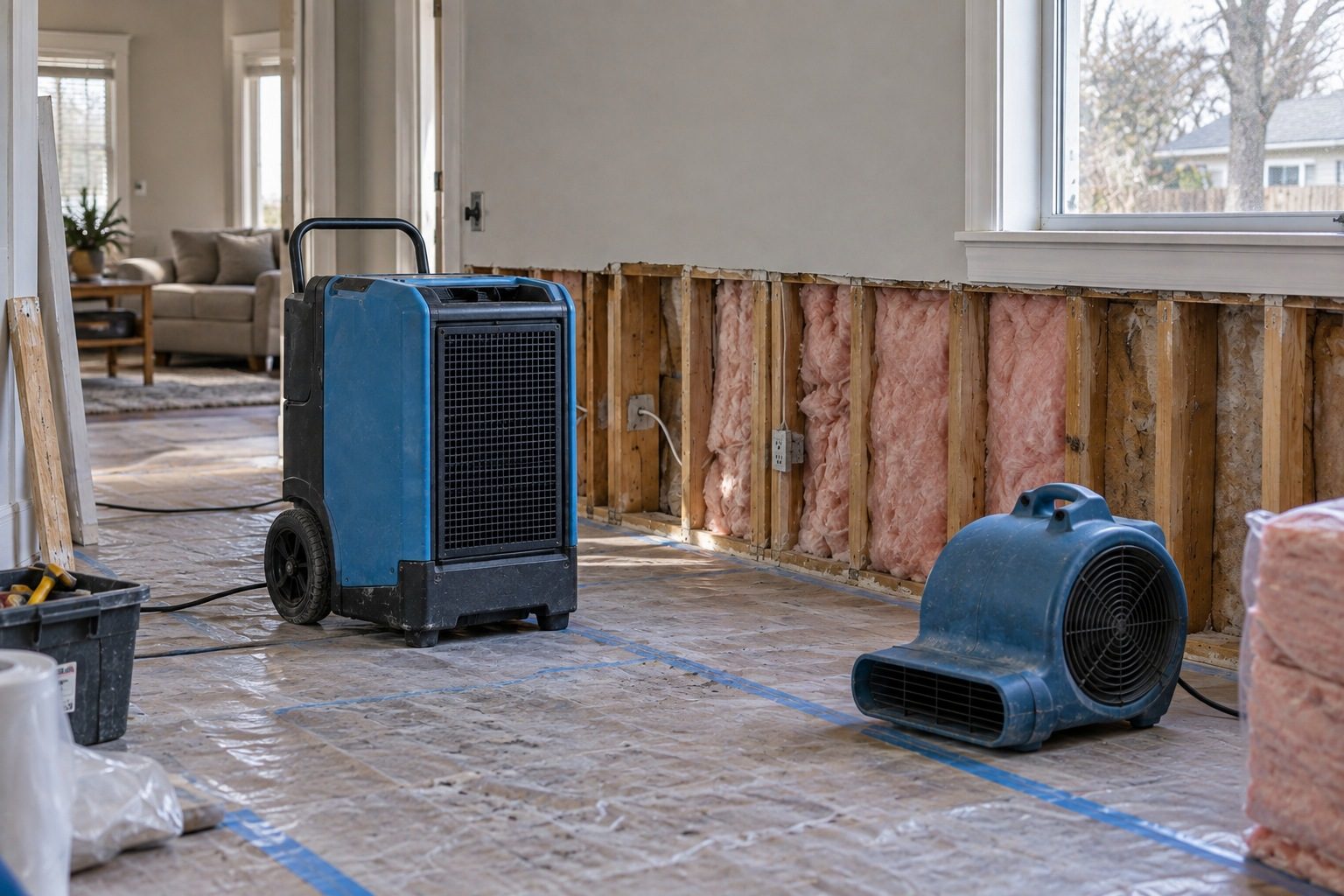 Illustrative image
- Family owned
- Central Coast local
- Residential + Commercial
- CA Lic. #1045554
What our water damage work covers
Removing water and drying out
Removing water and drying out affected areas.
Removing damaged materials
Taking out materials that can’t be saved so the structure can dry and be repaired.
Mold prevention and removal
Steps to prevent mold, and removing mold and fixing the moisture behind it. See damage & restoration.
Rebuilding
From drying out to finished walls, the same team does the work.
Structural repairs
Repairs to framing and floors damaged by water.
What to do right after water damage
- Stop the water if you can do it safely, for example by closing the main water valve.
- Keep away from standing water near outlets or appliances, and turn off power to wet areas only if it’s safe.
- Take photos of the damage before anything is moved or thrown out.
- Move furniture and belongings out of the wet area.
- Start drying quickly and call for help.
The EPA advises: “It is important to dry water-damaged areas and items within 24-48 hours to prevent mold growth.” (EPA)
What usually needs replacing
Some materials can be dried in place; others, especially soaked porous materials, often can’t. The EPA notes that “absorbent or porous materials, such as ceiling tiles and carpet, may have to be thrown away if they become moldy,” and publishes a material-by-material guide.
Why call JD Green after water damage
Water damage is stressful. One contractor who handles the repairs from start to finish makes it simpler.
- Repair and rebuild in one: From drying out to finished walls, the same team does the work.
- Quick to respond: We act quickly to limit further damage.
- Licensed: California contractor’s license #1045554.
- Family-owned and local: Ninth-generation Santa Maria Valley, working across the Central Coast.
What happens after you call.
Call or text us, or send an estimate request. Tell us what you want to build, where it is, and when you’d like to start.
We meet with you to look at the site and talk through your plans, options, and budget, so the scope is clear before any work begins.
We handle the design details, permits, and scheduling, then manage the crews and keep you updated through construction.
We walk through the finished work with you and make sure everything is right before we call the job done.
Common questions
What should I do first after water damage?
Stop the water if you can do it safely, keep clear of water near electrical outlets, photograph the damage, move belongings out of the wet area and start drying quickly.
How fast can mold grow after water damage?
Quickly. The EPA advises drying water-damaged areas and items within 24 to 48 hours to prevent mold growth. EPA guide.
Does homeowners insurance cover water damage?
It depends on your policy and the cause. Sudden events such as a burst pipe are often treated differently from slow leaks or flooding, and flood damage usually needs separate flood insurance. Check with your insurer; the California Department of Insurance has consumer tips.
Can I clean up mold myself?
For small areas, often yes. The EPA says: “If the moldy area is less than about 10 square feet (less than roughly a 3 ft. by 3 ft. patch), in most cases, you can handle the job yourself.” Larger areas, or mold inside walls or ducts, call for help. EPA guide.
Does wet drywall need to be replaced?
Not always. It depends on how wet it got, for how long, and whether mold has started. The EPA publishes a guide to what can be dried and what should be removed.
How do I avoid unlicensed contractors after damage?
Check the license number on the Contractors State License Board website before you hire. The CSLB also publishes guidance for disaster repairs. JD Green Construction’s license number is 1045554.